Shearing time will soon be upon us and with that comes the decision of what to do with all that fiber. There’s the good: most people know what to do with that. There’s the bad: some owners may have a few ideas but most are open to new suggestions. And then there’s the ugly: I would bet that this ends up in the trash or compost bin at every ranch. What if there were other ways to deal with the Bad and the Ugly? What if you could actually make some money off that trash? Trash to Treasure? Well, maybe not treasure, but a few coins in the pocket are better than none!
Second and Third quality fiber make up a significant enough percentage of most alpacas’ shearing that it can, and should, be creatively put to use. The question most have is “how?”
Felt it. Okay. Now what?
Flat felt can be shaped into a hanging plant basket liner. Price these less than the popular (and expensive) coconut shell liners and you still get a tidy profit. A quick trip to your local garden shop will provide you with price points. Use your nastiest thirds for this product and you can even promote it as self-fertilizing! Go one step further and dye some of the fiber creating colorful inserts. Much better than those blah brown coconut ones!
Shoe inserts. Cut flat felt in the shape of shoe inserts to keep feet toasty warm in the winter.
Slippers. Flat felt can be cut to make slippers. Most fabric stores carry a slipper pattern.
Seat covers. Simple rectangles work well at keeping the driver’s bum off the car’s cold winter seat. These can also be used underneath children’s car seats to protect the car’s original upholstery.
Jingle Felt Balls. Cats love these toys. Make a larger version, insert several jingles, and babies love them too! Priced at $2-$5 each they are a popular sale item with ranch visitors. Again, add color and they sell themselves!
Felt Covered Soap. Wrap fiber around a bar of soap and felt it. Once rinsed and dried, it kind of looks like your soap bar has a sweater on! The best part about this product is that the coarser thirds exfoliate as the soap cleans.
Paperweights. Find a smooth rock large enough to be a good size paperweight. Felt over it just as you would the bar of soap.
Bag it.
Did you know ballet dancers use lamb’s wool in the toes of their Pointe shoes? Did you also know that the dancers complain about the scratchiness of this wool? Save those second cuts from the blanket and you have a softer AND more durable alternative for dancers. The wool product usually runs $4 for one ounce. A quick visit to a ballet studio with an offer of free samples to the studio director might just generate a long-standing, if small, revenue stream.
Fly fishermen love to tie their own lures. A small bag of alpaca fiber containing a variety of colors and micron counts can be marketed to locally owned sports goods stores.
Doll makers are always looking for long locks. Suri fiber that you consider too coarse might be perfect to a doll maker. Be sure to keep it in lock form.
Create a felting kit. Typically neck fiber is soft but short. That lends it perfectly to needle or wet felting. These kits can be sold in your ranch store or market the wet felting kits to local preschools or home school groups. Add a few packages of unsweetened Kool-Aid and you have a “Dye to Felt” kit.
Draft stoppers. Stuff the fiber into a long fabric tube along with some rice or pebbles to make a draft stopper for doors or windows. A quick Internet search will bring up some creative ways to decorate them.
Blend it.
Keeping in mind that the end product will only be as soft as the coarsest fiber, blend your seconds and/or thirds with a fiber of comparable micron count and staple length. Some examples are sheep wool, llama fiber, adult mohair, and dog brushings (another free ingredient). One ranch even blends with fiber from their Curly Hair horses and another uses hair from their Highland Cattle. Fiber people love to buy exotic blends!
The blends can be made into roving or spun into yarn. As these products tend to be coarser, they are perfect for rugs, tapestry weaving yarns, or non-garment items like bags.
Barter it.
There are several businesses that sell alpaca fiber products and take fiber in trade for credit towards your order. Recently AOBA published the “Directory of Fiber Resources” listing many of these companies. All AOBA members received a copy of this guide.
Over the next few months I'll post specific instructions, or pointers on where to find specific instruction, on all of these projects. Right now, you can find Felted Soap instruction in my March 2006 post. Check back here often for other instructions! And if there's a project you do with alpaca fiber of less-than-prime quality, leave a note in the comment section. I'd love to get more ideas!
Showing posts with label felt. Show all posts
Showing posts with label felt. Show all posts
Thursday, April 27, 2006
Wednesday, March 01, 2006
Felted Soap
You couldn't ask for a more simple, enjoyable, and fun project! And I'm not just talking about something for the kids.
To use these fuzzy creations, you simply get it wet under running water and rub the fiber to lather up the soap. When you're finished, wipe off the excess soap suds and let it sit to dry.
Felted soaps are a gardener's best friend. Their fuzzy texture with its built-in soap dispenser makes cleaning fingernails a breeze! In fact, these soaps are better than a loofah.
So how does one make felted soap? Read on!
Step 1
Using a bar of soap, you're going to wrap it in fiber. I've used roving made from alpaca neck and legs that I dyed green (and in later photos it "magically" turns purple :-) but you can use any carded clean fiber. I wouldn't use uncarded fiber because it tends to create a lumpy fiber covering.

Step 2
Using a gentle stream of water, wet the fiber and soap. As you are doing this, scrunch the entire thing to work up a soapy lather. An alternative is to add some soap foam from one of those hand soap dispensers that put out foam soap. This will get things started faster. Be careful not to shift the fiber in a way that creates holes. I've found the fiber felts pretty quickly so be sure to cover any bare spots right away. If you do end up with bare spots, you can try adding some more dry fiber. Sometimes this works, and sometimes this doesn't. It seems to depend on the type of fiber used.
Step 3
Felt. To wet felt (and not all fibers will felt - be sure to start with a feltable fiber like alpaca), fibers must be exposed to soap and agitation. Another component often found in wet felting is extreme temperature changes. Thankfully, we don't need that component in this process. So once you have a soapy lather, rub the bar of soap along its edges. The more you agitate the fiber, the more it will felt making a strong covering for the bar of soap.

Step 4
Rinse off the excess soap lather.

And you're done! Let it sit out to dry.

To use these fuzzy creations, you simply get it wet under running water and rub the fiber to lather up the soap. When you're finished, wipe off the excess soap suds and let it sit to dry.
Felted soaps are a gardener's best friend. Their fuzzy texture with its built-in soap dispenser makes cleaning fingernails a breeze! In fact, these soaps are better than a loofah.
So how does one make felted soap? Read on!
Step 1
Using a bar of soap, you're going to wrap it in fiber. I've used roving made from alpaca neck and legs that I dyed green (and in later photos it "magically" turns purple :-) but you can use any carded clean fiber. I wouldn't use uncarded fiber because it tends to create a lumpy fiber covering.

Step 2
Using a gentle stream of water, wet the fiber and soap. As you are doing this, scrunch the entire thing to work up a soapy lather. An alternative is to add some soap foam from one of those hand soap dispensers that put out foam soap. This will get things started faster. Be careful not to shift the fiber in a way that creates holes. I've found the fiber felts pretty quickly so be sure to cover any bare spots right away. If you do end up with bare spots, you can try adding some more dry fiber. Sometimes this works, and sometimes this doesn't. It seems to depend on the type of fiber used.

Step 3
Felt. To wet felt (and not all fibers will felt - be sure to start with a feltable fiber like alpaca), fibers must be exposed to soap and agitation. Another component often found in wet felting is extreme temperature changes. Thankfully, we don't need that component in this process. So once you have a soapy lather, rub the bar of soap along its edges. The more you agitate the fiber, the more it will felt making a strong covering for the bar of soap.

Step 4
Rinse off the excess soap lather.

And you're done! Let it sit out to dry.

Tuesday, January 10, 2006
Finished Projects

In an effort to start the new year off right, I've finished two projects I started last year. The first are the felted slippers I mentioned in a previous post. For the felting process, I washed them in our washing machine with a load of clothes using hot water. Because we have a front loading washing machine, things don't usually felt well so I took them out and hand felted them some more in the sink. Then they were popped into the dryer for the final step. I'm quite pleased with the felting and fit results, although admit they'd work better on someone's feet who lives in a fully carpetted home. I find they're a bit too slippery for our linoleum and wood floors. These were made using handspun Lincoln wool.
 My second completed project is one I'm quite proud of. It is a dressy jacket made using dupioni silk and my hand-spun, handwoven yardage. The story of the woven yardage: I bought some black alpaca roving while at our very first alpaca show in Southern California around Fall 2003. We weren't showing - we were just interested in alpacas. I took home the roving and spun it but wanting to make it go as far as possible, I plied it with an Ashland Bay wool roving in fall colors. Beautiful yarn! In April 2004, I entered that yarn into a fiber arts competition at the Monterey Pronk, an alpaca show in Monterey California. It won a blue ribbon! The yarn then sat in my stash for a while as I tried to figure out what I wanted to do with it. Every spinner out there knows what I'm talking about - we have many yarns that sit until they "call to us". Well this one spoke to me when I had a black cotton yarn I had put on the loom to "play" with. That warp's purpose was specifically so I could experiment with different treadling and different tie-ups. But after I was "played" out, I found I had lots of warp left over. In a simple twill, I wove the 48" of fabric.
 Back to "let it sit until it calls to me". In September 2005, I pulled out my pattern stash. I wanted to use the fabric to make a vest but didn't find any patterns I liked. Instead this dress jacket called to me. I made a "muslin" using the pattern pieces, adjusted it to fit me, cut the pieces apart to accomodate the handwoven fabric width and made my jacket. It helps that I've got a lot of pattern drafting experience (see the link for Kings and Sages Apparel, my line of boy's clothing) but it really was quite easy. My next project is a black corduory winter (well, California winter) jacket using some of my other handwoven stash.
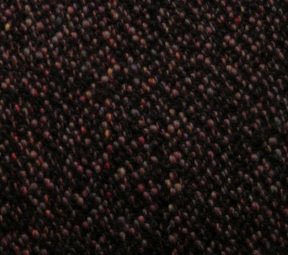
Close-up of woven fabric:
Subscribe to:
Posts (Atom)